Operations
SOFF enables the provision of a global public good: essential weather and climate data.

Accurate weather and climate data helps save lives, build resilience and protect property.
The Systematic Observations Financing Facility (SOFF) supports the sustained collection and international exchange of essential surface-based weather and climate observational data according to the internationally agreed Global Basic Observing Network (GBON) regulations. The implementation of GBON will significantly strengthen the provision of high-quality weather forecasts, early warning systems, and climate services at global, regional, and national levels. GBON data are essential for effective, resilient development and climate adaptation action that results in saved lives, improved livelihoods, and protected property.
CLEAR PROGRAMMING
CRITERIA FOR EFFECTIVE
DELIVERY
By helping to improve the observation, collection and exchange of weather and climate data, SOFF aims to:
SOFF OPERATIONAL PARTNERS
Together, these partners are working on SOFF implementation in a coordinated manner.




Authority

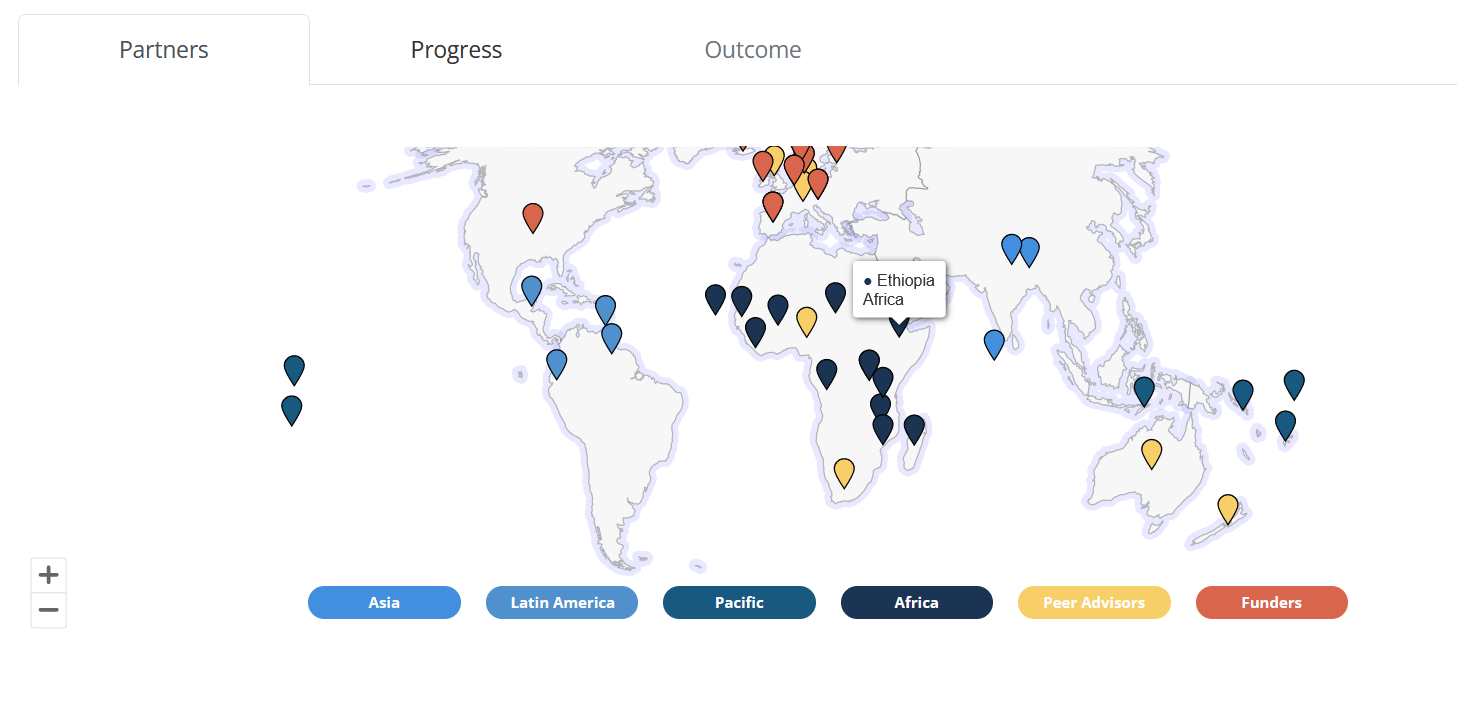
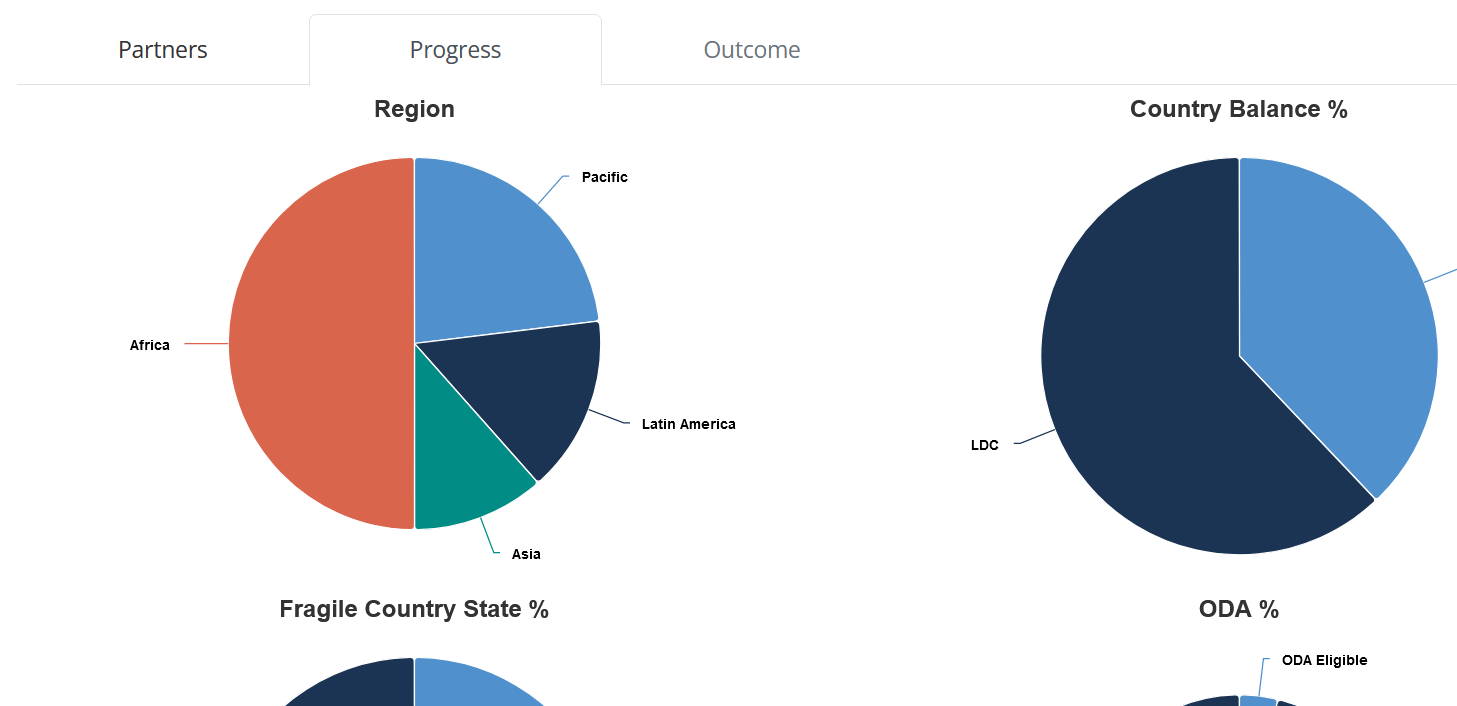
SOFF Dashboard
Access to SOFF support
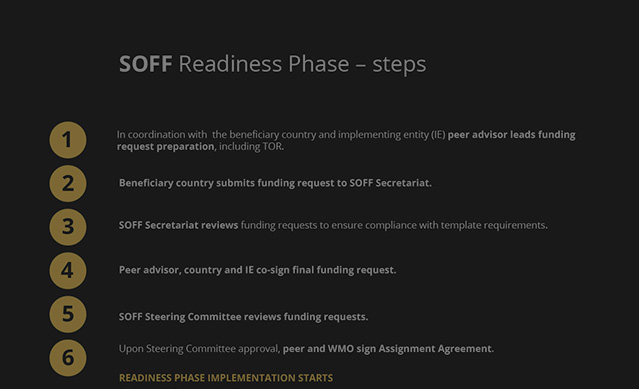
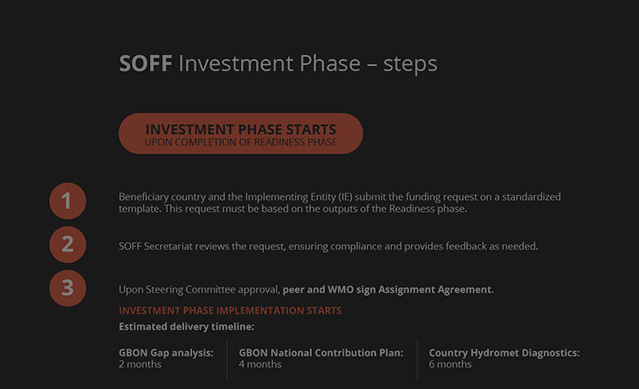
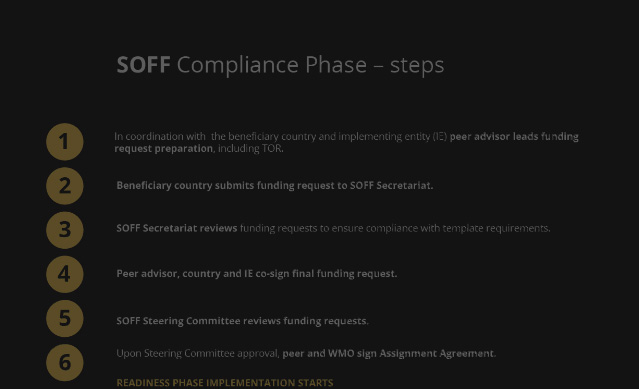
SOFF provides support to countries in three phases, the Readiness Phase, Investment Phase and Compliance Phase. These are implemented through a close collaboration between beneficiary countries, Implementing Entities and peer advisors.
Global Basic Observing Network (GBON) gap analysed and reviewed
GBON national contribution developed and verified
Country Hydromet Diagnostics conducted
Small Island Developing States (SIDS), Least Developed Countries (LDCs), and other Overseas Development Aid (ODA)-eligible countries can access technical assistance provided by SOFF peer advisors to undertake a Global Basic Observing Network (GBON) National Gap Analysis, develop a GBON National Contribution Plan and conduct the Country Hydromet Diagnostic.
View
GBON infrastructure in place.
GBON human institutional capacity development.
Small Island Developing States (SIDS) and Least Developed Countries (LDCs) can receive grants and advisory support to establish their Global Basic Observing Network (GBON) stations and strengthen the human and institutional capacity needed to implement the GBON National Contribution Plan and achieve GBON Compliance.
View
GBON data internationally shared and results-based finance provided.
Annual GBON compliance and impact report published
On-demand GBON operational and maintenance advisory provided
Weather and climate analysis products freely available through WMO Global Producing Centres
National Meteorological and Hydrological Services in Small Island Developing States (SIDS) and Least Developed Countries (LDCs) receive results-based finance and on-demand peer advisory to support the operation and maintenance of internationally sharing data stations.
View
CRITICAL GAPS IN CLIMATE AND WEATHER DATA MUST BE ADDRESSED
The current gaps in global surface-based data significantly impact the quality of weather and climate services locally, regionally, and globally.
Data Gap
Even though all weather prediction starts with global models, the information needed for weather and climate services is often highly local. Weather and climate prediction requires observations of the state of the atmosphere, ocean, and land; these are obtained from a wide range of instrumentation deployed on land, in and above the ocean, in the air and space. Ongoing monitoring by WMO of the observational data exchange reveals that the current data coverage falls far short of the minimum requirements, especially in Small Island Developing States and Least Developed Countries.
SOFF Approach
In 2021, 193 Members of the World Meteorological Organization agreed to a set of global standards, the landmark agreement Global Basic Observing Network (GBON). GBON sets out an obligation and clear requirements to acquire and internationally exchange the most essential surface-based observational data at a minimum resolution and time frame level.
GBON offers a new approach in which the surface-based network is designed, defined, and monitored at the global level.
SOFF was created to support the implementation of the GBON commitments and close those data gaps.